
How Epoxy Concrete Floor Coatings Handle Oil and Hot Tires
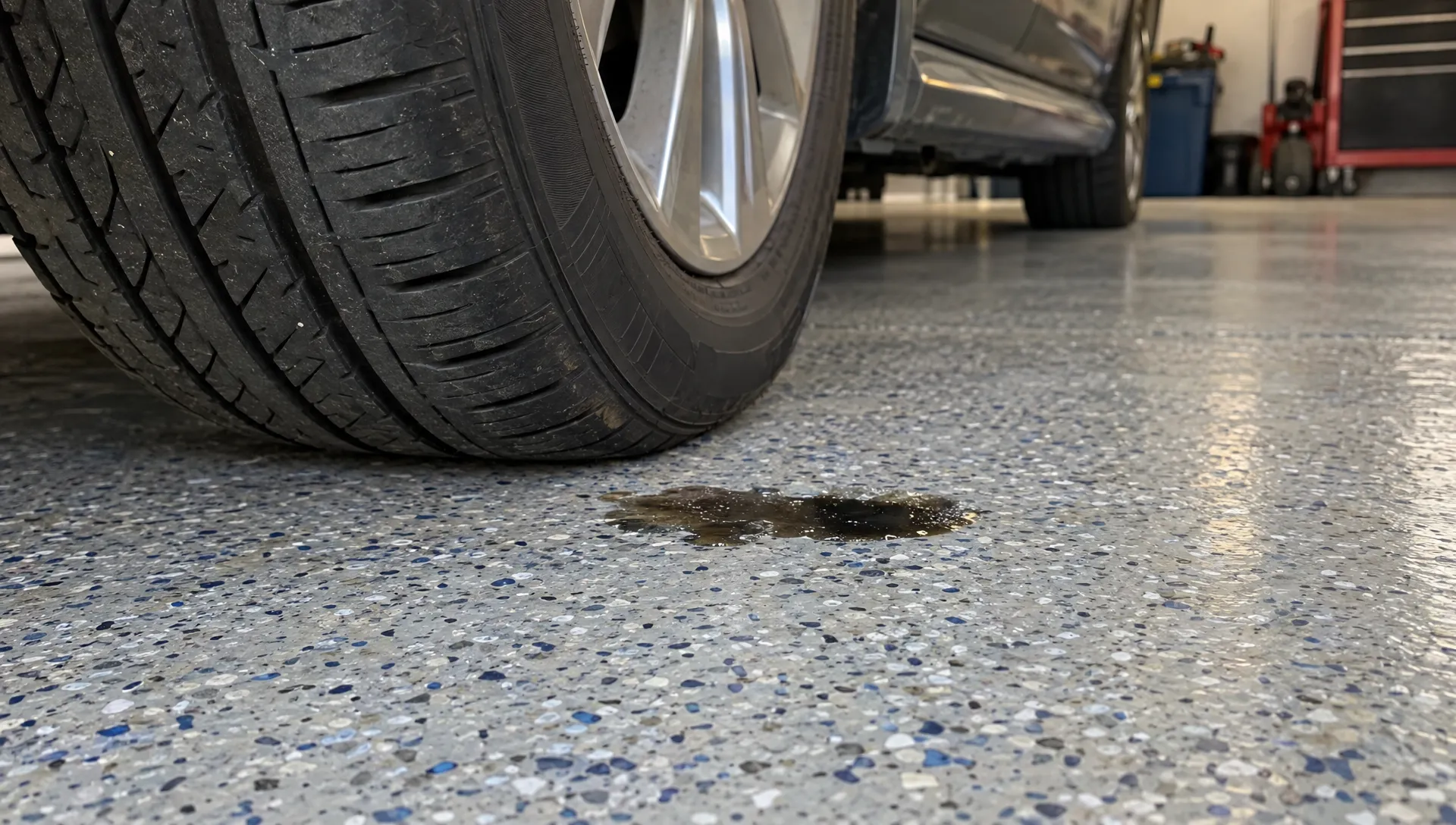
A garage floor has to handle more than foot traffic. Oil drips can leave dark stains, while tires coming home from a freeway drive can put a weak finish under stress. Properly specified and installed epoxy concrete floor coatings help protect against both, but oil resistance and hot-tire resistance are different performance requirements.
For San Diego homeowners, the useful question is not simply whether a floor is “epoxy.” It is which coating touches the tires, how well the system bonds to the concrete and whether it has fully cured before you park on it.
Oil resistance depends on the entire coating system
Bare concrete is porous. Motor oil can soak into its surface, making stains difficult to remove and potentially complicating a future coating installation. A continuous resin coating creates a barrier that helps keep spills accessible for cleanup.
That protection depends on the product formulation, its condition and the length of exposure. A fresh drip wiped up promptly is a different challenge from an unnoticed leak sitting beneath a vehicle for weeks.
Properly cured epoxy concrete floor coatings generally resist motor oil, but that does not make every product stain-proof or resistant to every automotive fluid. Gasoline, brake fluid and aggressive cleaners require separate checks against the manufacturer's chemical-resistance information.
Also, the exposed surface may not be epoxy. A garage system can combine an epoxy base with decorative flakes and a different clear topcoat. That topcoat takes the direct contact with oil, rubber and cleaning products, so its specifications matter as much as the name used to describe the floor.
Different spills need different expectations
| Substance or exposure | Main concern | Practical response |
|---|---|---|
| Motor oil and grease | Slippery residue and possible staining after prolonged contact | Absorb promptly, then clean with an approved product |
| Gasoline or brake fluid | Possible discoloration or chemical damage, depending on the coating | Follow spill-safety guidance and check product-specific resistance |
| Repeated vehicle leaks | Longer exposure and contamination around damaged areas | Repair the leak and inspect the finish during cleanup |
| Strong degreasers or solvents | Dulling, softening or other finish damage | Use only cleaners approved for the installed system |
A chemical-resistance chart should identify the substance tested and the exposure conditions. A broad “chemical-resistant” claim alone does not tell you how a particular spill will affect your floor.
Can epoxy concrete floor coatings resist hot-tire pickup?
Yes, a suitable system can withstand normal vehicle parking, including contact with warm tires. Problems arise when the coating, its bond to the slab or its cure state cannot handle that exposure.
Hot-tire pickup describes coating that lifts or pulls away where a tire contacts the floor. Warm rubber can become tackier, and heat can soften a susceptible finish. As the vehicle moves, the contact can place stress on a weak coating or poorly bonded area.
Several conditions can contribute: residual oil beneath the coating, inadequate concrete profiling, incompatible existing paint or parking before the system is ready for vehicle traffic. A premium topcoat cannot compensate for a weak layer underneath it.
Tire marks are not the same as peeling
A dark tire print does not automatically mean the coating has failed. Rubber residue or tire-related discoloration can leave a mark while the underlying finish remains intact.
The distinction matters when evaluating epoxy concrete floor coatings: a surface mark calls for careful cleaning, while missing material calls for an adhesion assessment.
Look at the affected area after removing loose dirt. If the finish is continuous but discolored, start with the installer’s approved cleaning method. If you see bare concrete, loose chips, curling edges or a layer stuck to the tire, avoid scraping aggressively and contact the installer.
Photograph the area before attempting stronger cleaners. Note when the floor was installed, when parking resumed and whether the damage is limited to tire contact points. Those details help separate a cleaning issue from a cure or bonding problem.
Preparation determines whether the coating stays attached
A floor can look clean and still contain contamination that interferes with adhesion. Older oil stains are especially important because contamination may extend below the visible surface.
Professional preparation usually involves mechanical profiling to create the surface required by the selected system. Oil-affected areas may need additional treatment and evaluation. Grinding alone should not be assumed to remove every trace of deeply absorbed oil.
For epoxy concrete floor coatings, a reliable installation starts with a sound, suitably prepared substrate, not simply a thicker final coat. Tell the contractor where vehicles have leaked, even if you recently cleaned the stains.
Moisture also deserves attention. A bond problem caused by moisture beneath the finish can appear near parking areas without being caused by hot tires. Understanding why moisture testing matters before installation helps you distinguish that risk from surface wear.
One-day installation does not mean immediate parking
Application time and return-to-service time are separate. A crew may finish installing a floor in one day, but the system still needs to reach the manufacturer’s specified condition for vehicle traffic.
Temperature, humidity and the products used can affect that schedule. A floor that feels dry under a fingertip is not necessarily ready for the pressure and heat of a parked vehicle.
Ask for separate written instructions covering foot traffic, moving belongings back, vehicle parking and washing. Follow the installed system’s instructions rather than a cure time found for another product online. During unusually hot weather, ask whether the manufacturer recommends any additional precautions before the first parking cycle.
How to clean oil without damaging the finish
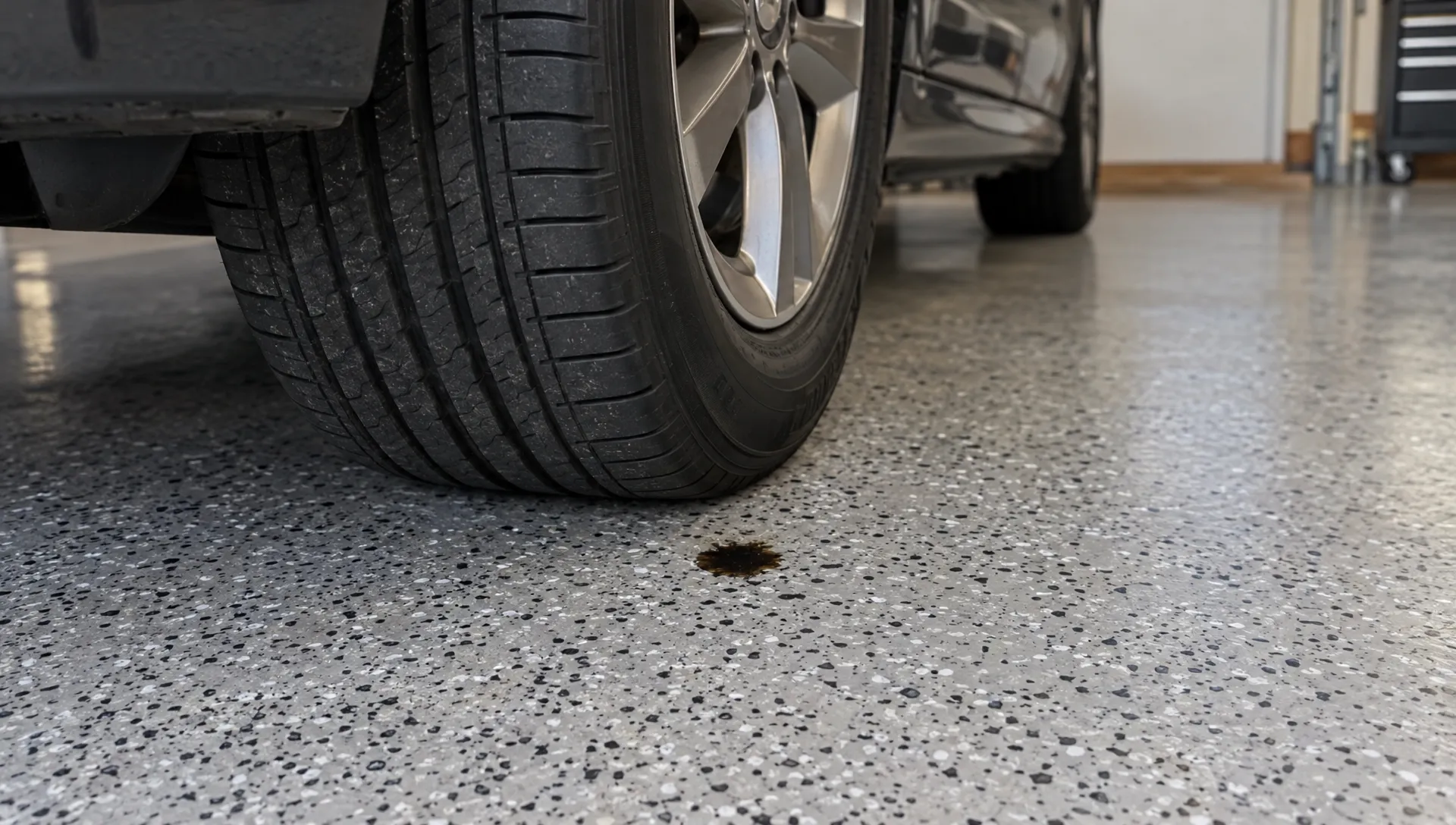
Prompt cleanup reduces both slip risk and the chance of a lasting mark. Start with the least aggressive method approved for your floor, rather than reaching immediately for a solvent or heavy-duty degreaser.
- Contain the spill: Keep people and pets away, then use a suitable absorbent to collect free oil without spreading it across the garage.
- Lift the residue: Collect the absorbent carefully and handle it according to local disposal requirements.
- Wash gently: Use the installer-approved cleaner at its recommended dilution with a soft brush or microfiber tool.
- Remove cleaner residue: Follow the product’s rinsing instructions, collect the dirty liquid and let the area dry before checking for remaining marks.
For routine care, epoxy concrete floor coatings benefit more from prompt, gentle cleaning than repeated scrubbing with increasingly harsh chemicals. Avoid wire brushes, abrasive pads and unapproved solvents. Never mix cleaning products.
If an oil shadow remains, ask the installer for the next approved treatment. A stronger cleaner may damage the sheen without removing discoloration that has already developed.
Keep oily wash water out of drains
Do not hose oil into a floor drain, driveway gutter or storm drain. Collect it instead. The EPA’s guidance on managing and recycling used oil explains why used oil needs proper handling; local disposal rules also apply to contaminated absorbents and wash water.
If a floor drain backs up during cleaning, stop adding water and contact a drainage specialist in your area. Property owners in Kingston, Ontario, can contact TapTech for drain and sewer service, while San Diego homeowners should use a local provider. A new floor coating will not correct a blocked drain.
Choose a system for parking conditions, not just appearance
Decorative flakes and gloss influence how a floor looks, but they do not establish its resistance to oil or warm tires. Ask the contractor to identify the base coat, any intermediate layers and the exposed topcoat.
When comparing epoxy concrete floor coatings, request product-specific information about automotive-fluid resistance, vehicle return-to-service time and any hot-tire coverage in the written warranty. Also ask what preparation is included for existing oil stains or old paint.
Polyurea and polyaspartic products are other options used in garage coating systems. Depending on formulation, they can offer useful curing and performance characteristics, but the chemistry name alone is not a guarantee. Bay City Coatings’ guide to why San Diego homeowners choose polyaspartic floors provides additional context for that comparison.
A useful proposal connects the products to your actual garage: existing contamination, slab condition, sunlight exposure, parking habits and maintenance expectations. “Industrial strength” is less informative than a clearly identified system with written care instructions.
Frequently asked questions
Can a coating be installed over old oil stains? Sometimes, but the stained area needs evaluation and appropriate preparation. Discoloration alone does not reveal how much oil remains in the concrete. Coating over unresolved contamination can compromise adhesion.
Will epoxy concrete floor coatings stop every hot-tire mark? No. Resistance to coating pickup does not guarantee that rubber residue or discoloration will never appear. An intact finish with a dark mark is different from a coating that peels away under the tire.
Should I use parking mats to protect the floor? Ask the installer before adding them. A compatible mat can help collect drips, but some rubber-backed products can discolor certain finishes or trap moisture and debris. Mats should not substitute for a properly cured coating.
Can I park as soon as the floor feels dry? No. Follow the written vehicle return-to-service time for the installed system. Surface dryness does not establish that the coating has developed the properties needed for vehicle loads and warm-tire contact.
Get a coating recommendation for your garage
Bay City Coatings is family-owned, based in Chula Vista and serves homeowners throughout San Diego County with epoxy, polyurea and polyaspartic coating options. Its installation service includes surface preparation, decorative flakes and a durable topcoat.
Before choosing epoxy concrete floor coatings, get your slab and parking conditions evaluated. Request a free garage floor coating quote or call 619-363-1055 to discuss existing oil stains, system options and the parking schedule for your installation.
Ready for Your Free Quote?